Redundant Lovers
Galerie Allen, Paris, 2025
This exhibition features painted mussel shells, carefully displayed on the wall— awkwardly large, almost unnatural. These oversized shells are a byproduct of Southeast China’s freshwater pearling industry, which produces the overwhelming majority of the world’s pearls. The work uses ink painting and mineral pigments, cherished because, unlike watercolors and oils that change over time, they last forever. In place of the precious material that perhaps inhabited the mollusk, Yeung paints circles inside the hollow shell, which he calls “remains of hope and lower expectations.” These painted mollusks also refer directly to Japanese golden shells (kai-awase), hand-painted shells that were part of an elaborate court game cherished by Japanese aristocracy. Players had to find the matching half of their meticulouslycrafted shell, often an arduous task in sets of hundreds of tokens. In Yeung's interpretation of the kai-awase game, however, the giant shells have no match. After the two parts of the marine animal are broken apart to remove pearls, killing the animal, they are tossed to be sold in bulk. Discarded in a huge mass of leftovers, they are forever destined to remain alone.
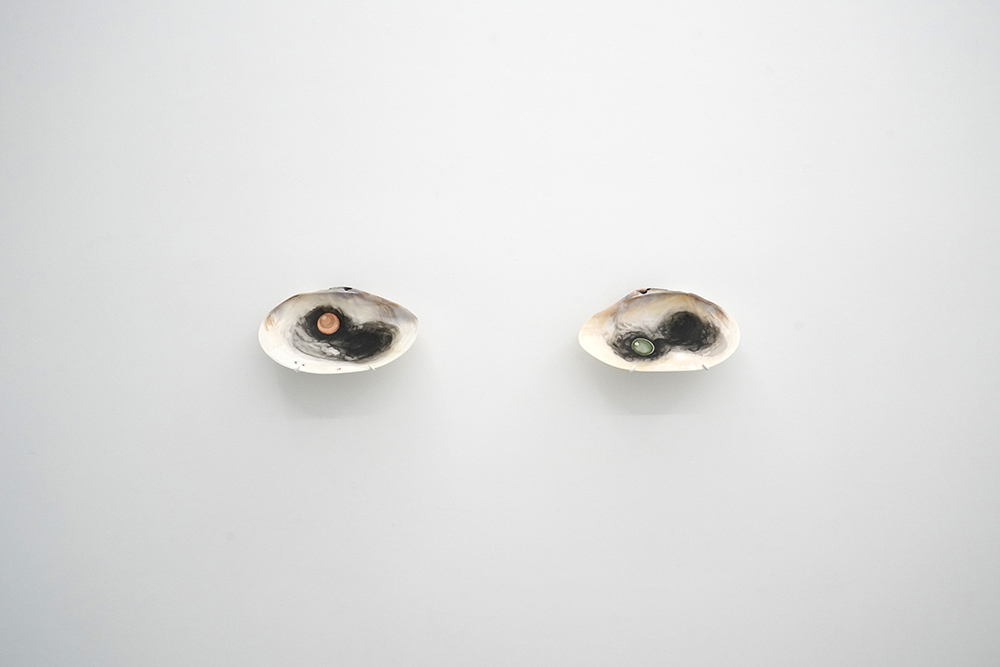
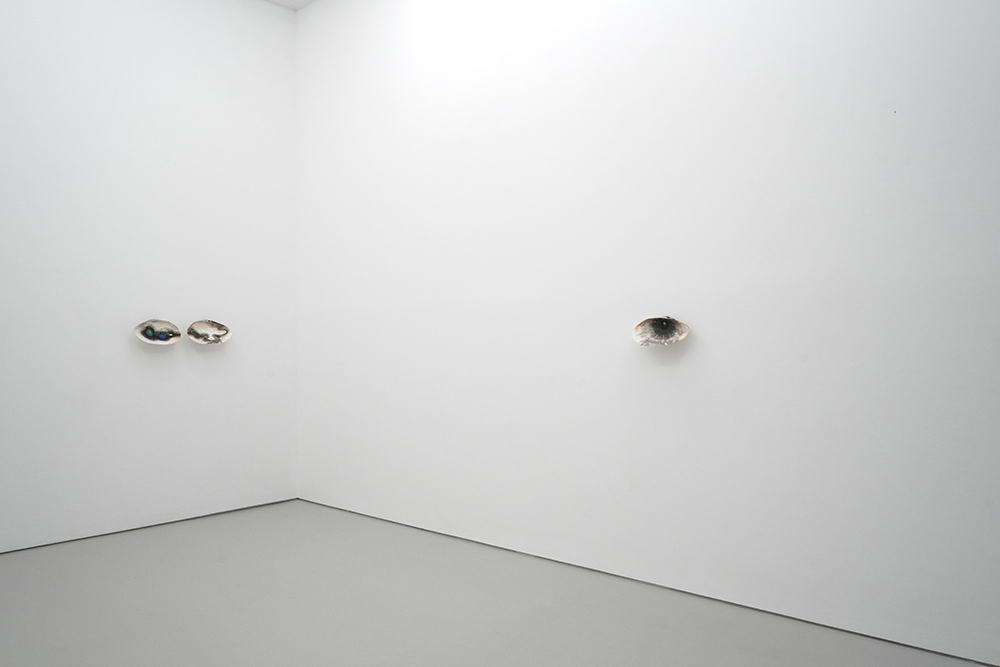
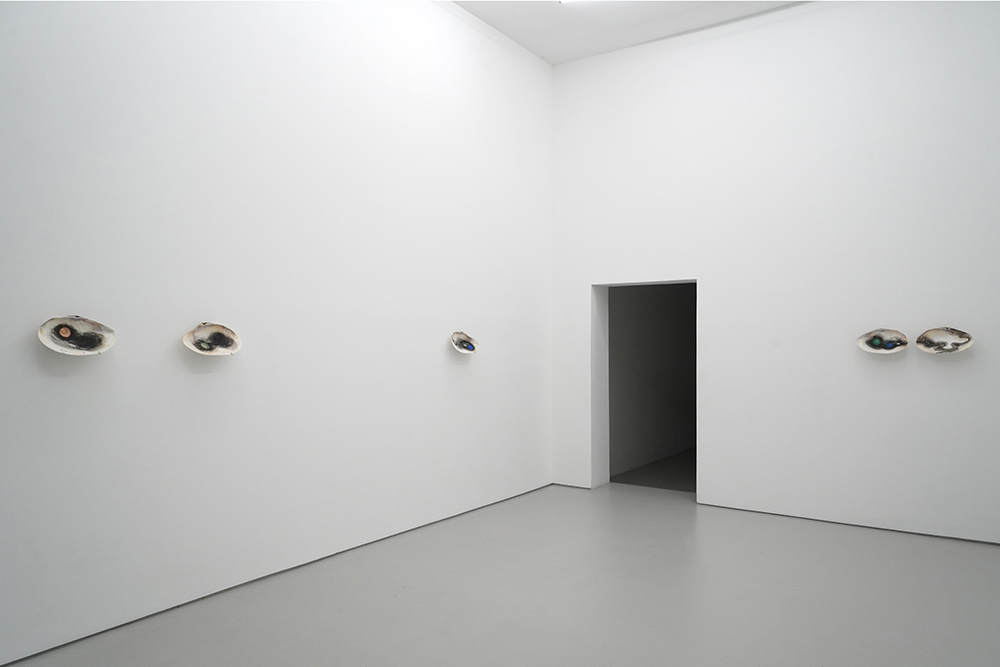
Redundant Lovers (Azurmalachite)
2025
Azurmalachite, Azurite, Malachite, ink, and freshwater pearl mussel
Redundant Lover (Green Agate)
2025
Green Agate, ink, and freshwater pearl mussel
Redundant Lover (Azurite)
2025
Azurite, ink, and freshwater pearl mussel
Redundant Lover (Red Agate)
2025
Red Agate, ink, and freshwater pearl mussel
Redundant Lover (Black Obsidian)
2025
Black Obsidian, ink, and freshwater pearl mussel